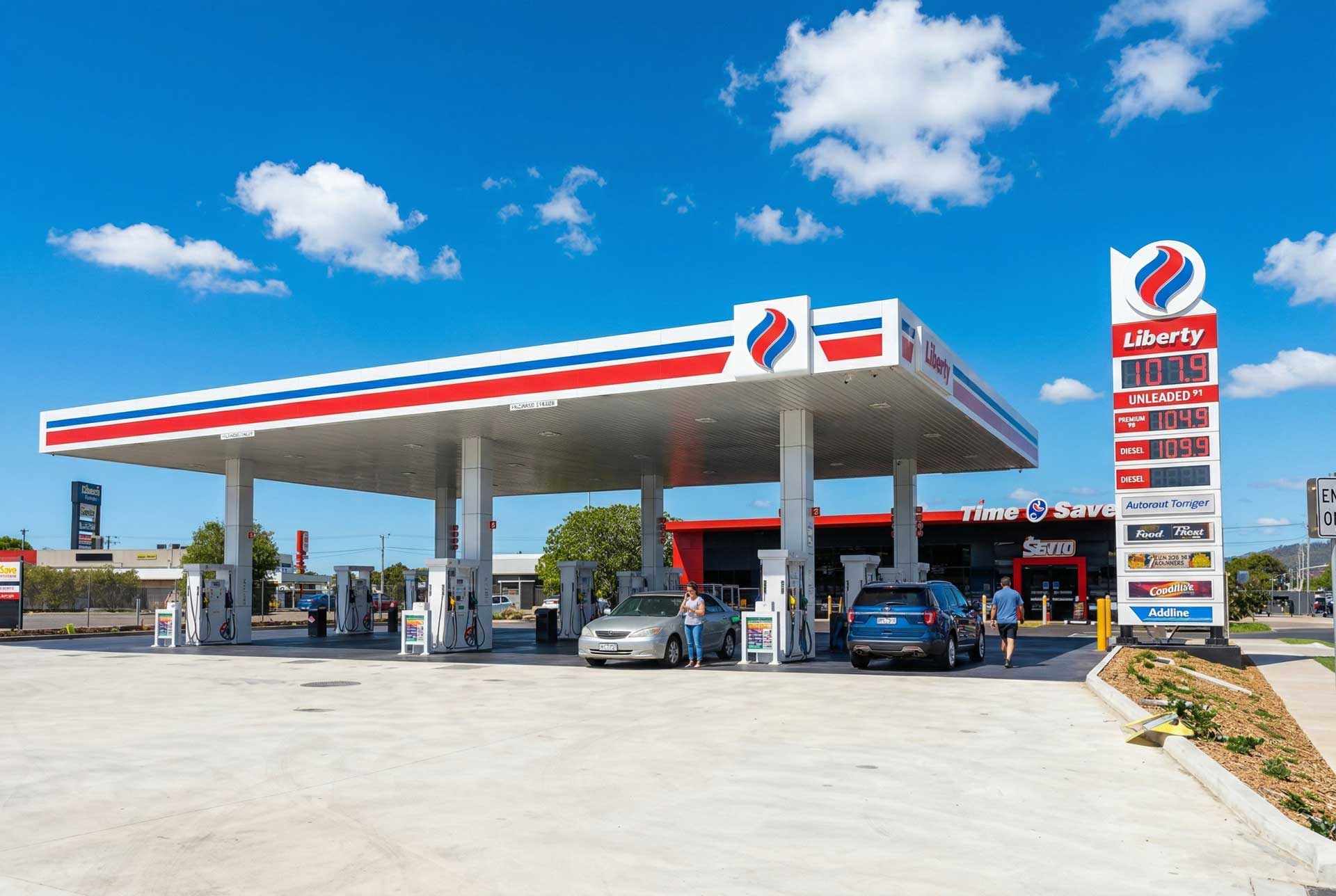
Australian service station canopy projects require clear drawing coordination, reliable steel fabrication, corrosion protection, and strict quality control. In this article, we explain how TL Engineering Co., Limited supports these projects from drawing review to shipment.
At TL Engineering Co., Limited, we support service station canopy projects with a practical workflow that helps clients move from drawing review to production, inspection, and shipment. Our team has experience working with overseas steel structure projects and understands the importance of clear communication, drawing confirmation, quality control, and on-time delivery.
Understanding Project Requirements from the Beginning
For many Australian service station canopy projects, the client usually provides one of the following:
- design drawings
- concept drawings
- structural requirements
- canopy dimensions and layout
- material specifications
- project location and usage requirements
At the start of the project, our engineering and sales teams carefully review all provided information. This early-stage review is important because it helps reduce mistakes later in production and ensures that both sides clearly understand the project scope.
For overseas projects, drawing clarity and technical confirmation are especially important. Even a small misunderstanding in dimensions, connection details, or material grades can create delays during fabrication or installation. That is why we put strong emphasis on communication before production begins.
Supporting Material Adjustment Based on Project Requirements
In some projects, the original design may specify certain steel grades, sections, or materials based on local standards. When needed, we can help review these requirements and make strength-equivalent material adjustments for approval.
This is particularly useful for export projects where the client wants practical sourcing and manufacturing efficiency while still maintaining required structural performance. Our goal is not simply to produce steel members, but to help the client achieve a technically acceptable and fabrication-friendly solution.
Before moving forward, we confirm any adjustments with the client and provide revised technical information when needed. This helps create a smoother workflow between engineering review and fabrication.
Re-Preparing Drawings for Approval
After confirming the project requirements, our team can re-prepare drawings for client review and approval. This step is very important in service station canopy projects because the canopy structure often includes:
- roof framing members
- columns
- connection plates
- edge beams
- purlins or secondary members
- bolt connection details
- shop fabrication details
The approved drawing stage gives the client a clear understanding of what will actually be produced. It also helps prevent rework and reduces the risk of fabrication errors.
For export projects, drawing approval is often one of the most important control points. We treat this step seriously because accurate drawings help both manufacturing and installation proceed more smoothly.
Issuing Shop Drawings Before Production
Before fabrication begins, we issue shop drawings for final confirmation. These drawings are used internally for production and externally for client verification.
Shop drawings usually include:
- member sizes
- cutting details
- welding details
- hole positions
- plate dimensions
- assembly references
- identification marks
This step helps make production more transparent. It also gives the client confidence that the final steel components will match the confirmed design intent.
For Australian service station canopy projects, where installation efficiency and dimensional accuracy matter greatly, well-prepared shop drawings are a key part of a successful project.
Fabrication Process for Australian Service Station Canopy Projects
Once drawings are confirmed, production begins. Our fabrication process is organized to ensure quality, efficiency, and dimensional consistency.
Typical production steps include:
1. Steel Cutting
Steel plates, tubes, and sections are cut according to approved shop drawings. Accurate cutting is the foundation of good fabrication quality, especially for connection points and assembled structural members.
2. Assembly and Fit-Up
Before welding, components are assembled and checked to ensure that dimensions, hole positions, and alignment are correct.
3. Welding
Welding is carried out based on fabrication requirements and drawing details. Welding quality is critical for service station canopy structures because these projects require both structural reliability and a clean finished appearance.
4. Dimensional Checking
During and after fabrication, dimensions are checked to verify that the components match approved drawings. This helps reduce installation issues at the project site.
5. Surface Treatment Preparation
Before galvanizing or other protective treatment, the fabricated members are cleaned and prepared according to process requirements.
Hot-Dip Galvanizing for Corrosion Protection
For many outdoor canopy projects, corrosion protection is a major concern. Service station canopies are exposed to sun, rain, wind, and changing weather conditions over long periods of time. Because of this, hot-dip galvanizing is often the preferred anti-corrosion solution.
Hot-dip galvanized steel structures offer several advantages:
- strong corrosion resistance
- longer service life
- reduced maintenance needs
- better suitability for outdoor projects
- reliable protective coating over fabricated steel members
For clients in Australia and New Zealand, durability is an important factor in canopy projects. A suitable anti-corrosion treatment helps ensure long-term performance and supports the practical needs of fuel station infrastructure.
Quality Control Throughout the Process
Quality control is not only about the finished product. In our view, quality control must run through the entire project process, from drawing review to packing before shipment.
Our quality control work can include:
- checking raw material information
- verifying member dimensions
- checking weld appearance
- reviewing assembly accuracy
- confirming marking and identification
- inspecting finished steel components before packing
For export projects, stable quality is essential because replacement or correction after shipment is costly and time-consuming. That is why we focus on preventing problems before goods leave the factory.
Third-Party Inspection When Required
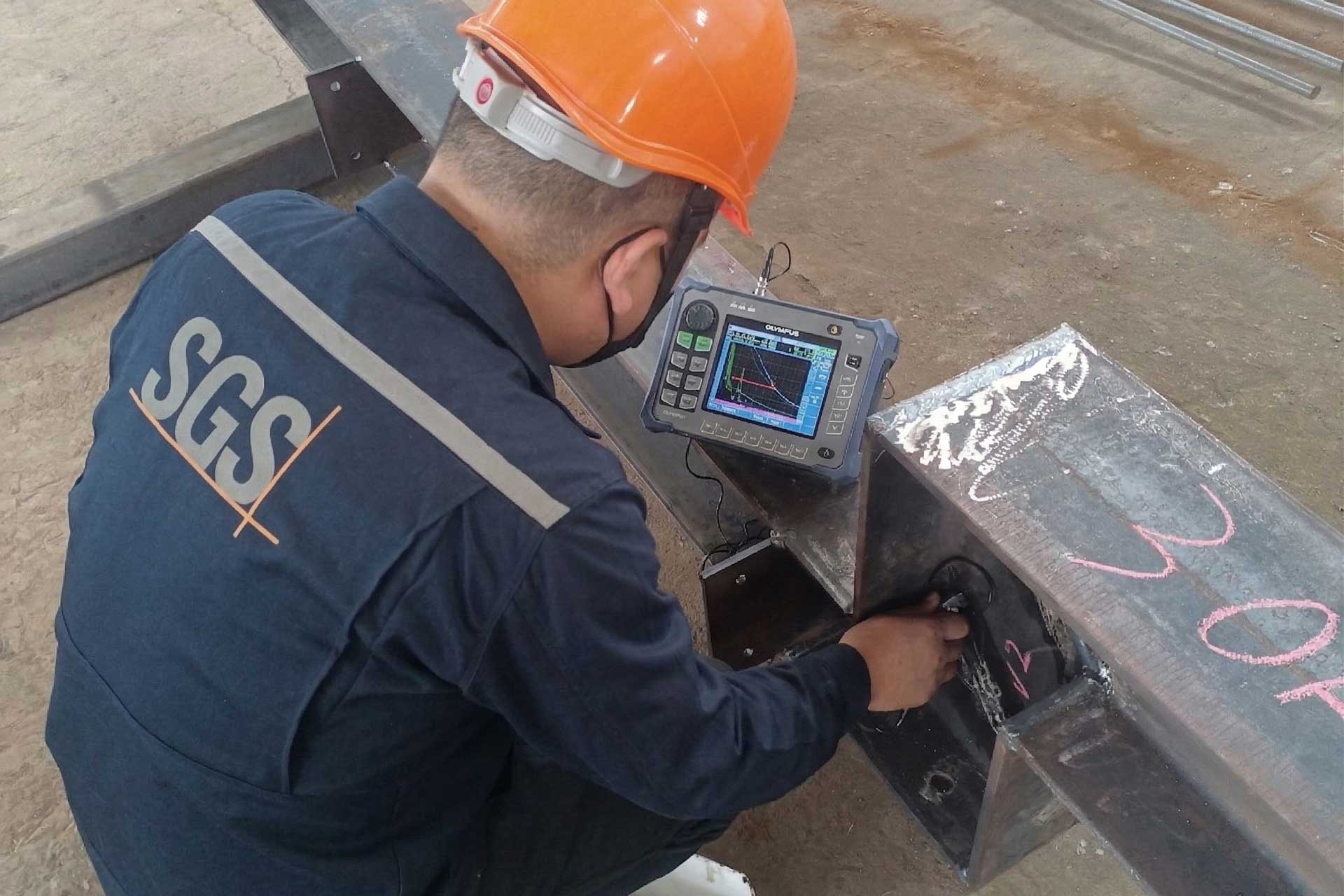
Some clients require independent inspection before shipment. When needed, third-party inspection agencies such as SGS can be arranged for project inspection.
Third-party inspection may cover items such as:
- weld appearance
- dimensions and tolerances
- visual quality
- surface condition
- quantity verification
- packing inspection
This process helps provide additional confidence for overseas buyers and project managers. It also supports smoother communication between suppliers, contractors, and end users.
For international projects, independent inspection can be an important part of risk control and project assurance.
Packing and Shipment Preparation
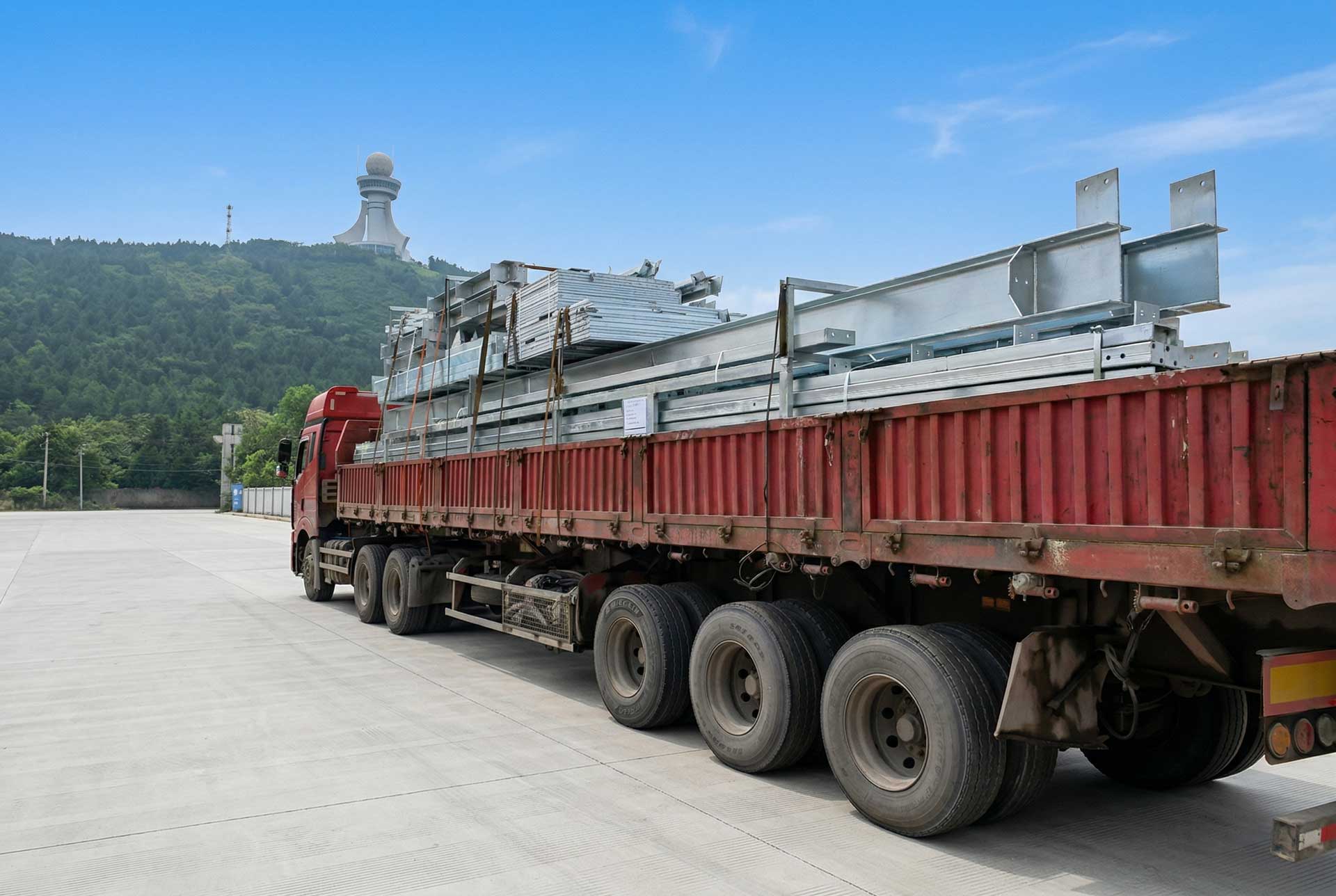
After fabrication and inspection are completed, we prepare the goods for export packing and shipment. For steel structure export projects, packing is more than a logistics step. Proper packing helps protect components, reduce the risk of damage, and improve site handling efficiency.
Our shipment preparation may include:
- member marking
- packing by type or installation sequence
- protection of finished surfaces
- quantity checking
- loading coordination
Well-organized packing can make a real difference for the project team when the goods arrive on site.
Why Overseas Clients Choose to Work with Us
For service station canopy projects, clients are not only buying steel. They are also choosing a supplier that can communicate clearly, understand project needs, and support execution from drawing review to delivery.
Clients value suppliers who can provide:
- responsive communication
- practical engineering support
- clear drawing coordination
- reliable fabrication
- export project experience
- quality control before shipment
At TL Engineering Co., Limited, we understand that overseas steel structure projects require careful coordination at every stage. Our role is to help clients turn drawings and project requirements into fabricated steel components that are ready for delivery and installation.
Conclusion
Australian service station canopy projects require a supplier that can do more than basic steel processing. From drawing review and material adjustment to shop drawing confirmation, fabrication, galvanizing, inspection, and shipment, every step matters.
A well-organized workflow helps reduce risk, improve communication, and support better project execution. For clients looking for a steel structure supplier for service station canopy projects, technical coordination and production reliability are just as important as price.
If you have service station canopy drawings, design requirements, or project inquiries, feel free to contact TL Engineering Co., Limited. Our team is ready to support your project with quotation, technical review, and fabrication service.
