
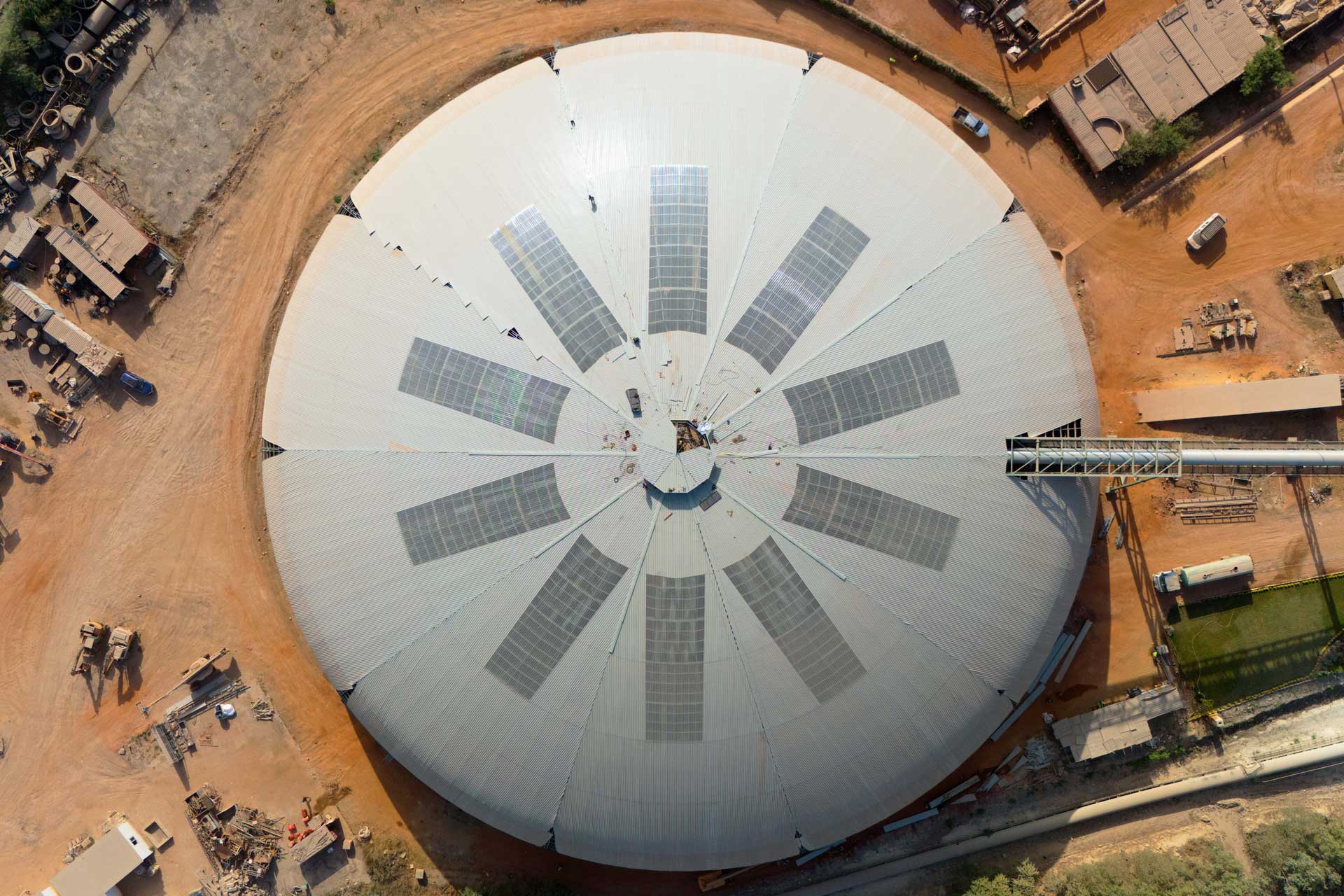
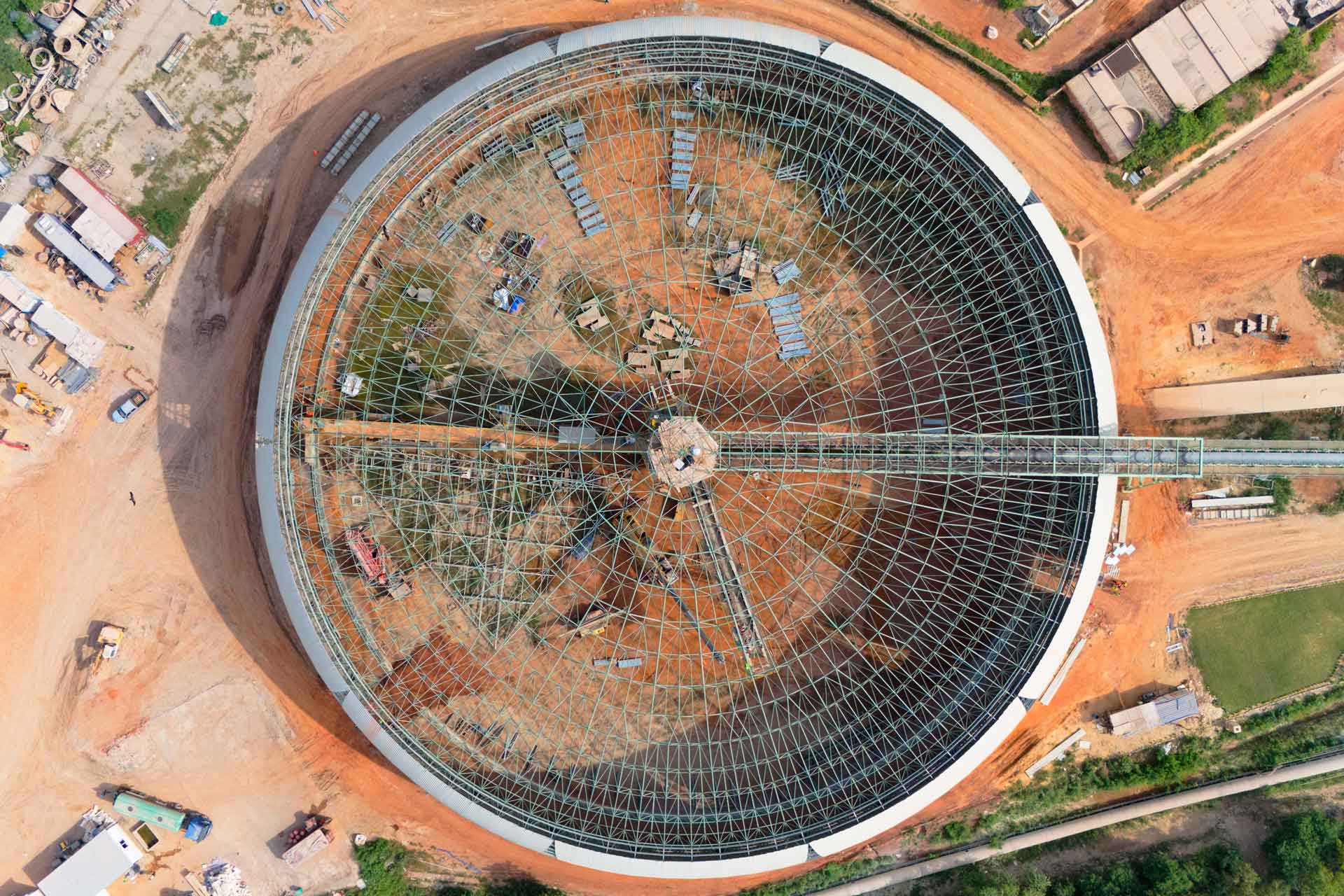
A space frame roof system for coal storage is widely used in industrial projects that require large spans, efficient load distribution, and practical coverage for bulk material operations. Choosing the right system depends not only on structural design, but also on fabrication, transportation, installation, and site conditions.
Coal storage, cement raw material storage, and other bulk handling facilities usually operate in demanding industrial environments. These projects often require wide clear spans, reliable weather protection, stable steel performance, and an efficient installation process. Because of these requirements, space frame roofing is frequently considered for modern storage sheds and enclosed stockpile facilities.
At TL Engineering Co., Limited, we work with steel structure and space frame projects for industrial applications. In this article, we explain how project teams can evaluate a space frame roof system for coal storage and similar facilities, and what information should be confirmed before design review and quotation.
What Is a Space Frame Roof System?
A space frame roof system is a three-dimensional structural system made of interconnected members and nodes. Instead of relying only on a simple beam-and-column or traditional truss arrangement, the load is distributed through a network of members working together.
For industrial roofing projects, this gives several practical advantages:
- efficient load distribution
- suitability for large spans
- flexible roof geometry
- good structural stability
- reduced need for dense internal support points
This makes a space frame roof system especially attractive for facilities where uninterrupted internal space is important for storage, equipment movement, or operational flexibility.
Why Coal Storage and Bulk Material Facilities Use Space Frame Roofing
Coal storage and bulk material facilities usually need large covered areas with practical clearance below the roof. The internal space must often accommodate stockpiles, conveyors, reclaiming equipment, loading activity, or vehicle access. As a result, too many internal columns can reduce usability and complicate operations.
A space frame roof system for coal storage can help project teams achieve:
- large clear-span coverage
- efficient use of internal space
- adaptable roof layouts
- reduced visual obstruction inside the shed
- a stable structural solution for industrial-scale roofing
For enclosed or semi-enclosed stockpile facilities, the roof is not just a shelter. It is part of the working environment. The structure must match how the site will actually operate.
Key Project Inputs Before Selecting the System
Before a supplier can properly review or quote a space frame roof system, the project team should confirm the main design and operational inputs. Without these details, even an initial quotation may miss important factors.
The most useful inputs include:
- overall span and length
- roof shape and rise requirements
- support arrangement
- intended use of the facility
- storage material type
- environmental and site conditions
- corrosion exposure level
- required surface treatment
- transportation limits
- installation sequence and site constraints
For coal storage and cement-related projects, the type of stored material matters because it influences dust conditions, maintenance expectations, and the broader plant environment.
Span, Clearance, and Operational Layout
One of the first questions in any industrial roofing project is how much clear space the operation actually needs. A structure that looks efficient in drawings may still create site limitations if equipment access, stockpile height, or internal traffic were not fully considered.
When evaluating a space frame roof system for coal storage, project teams should review:
- required clear width
- internal height needs
- conveyor routing
- stockpile management method
- maintenance access zones
- crane or lifting considerations if applicable
The roof system should support operations, not work against them. A well-chosen space frame solution balances structural performance with real plant usage.
Environmental Conditions and Corrosion Considerations
Industrial storage environments can be harsh. Coal, cement, clinker, and other bulk materials may be associated with dust, moisture, abrasive conditions, or chemical exposure depending on the project type and location.
This is why the roof system should not be evaluated only from a geometry perspective. It should also be reviewed from a durability perspective.
Important questions include:
- Is the site in a coastal or humid environment?
- Will the structure be exposed to high dust conditions?
- What maintenance access will be available after installation?
- Does the project require painting, galvanizing, or another protective system?
- What is the owner’s expected service life and maintenance strategy?
Material and coating decisions should be aligned with the site reality from the beginning.
Fabrication Accuracy and Node Quality
A space frame roof system depends heavily on fabrication accuracy. Member length, node processing, hole positions, welding quality, and identification control all affect installation efficiency later.
For this reason, a project team choosing a supplier should look beyond unit price and ask practical fabrication questions such as:
- Does the supplier have experience with space frame production?
- How are nodes processed and checked?
- How are members marked for installation?
- Is there dimensional inspection before shipment?
- Can trial assembly or fit-up verification be arranged when required?
In large industrial roofing projects, small fabrication inaccuracies can multiply during site erection. Good manufacturing discipline is therefore a major part of project risk control.
Transportation and Packing Strategy
For export projects, transportation planning should be considered before fabrication is finalized. Large steel structures must be packed, loaded, shipped, unloaded, and handled on site. If transport limitations are ignored too late, they can affect delivery cost and installation efficiency.
For a space frame roof system for coal storage, the project team should review:
- maximum shipping lengths
- packing by zone or sequence
- member identification method
- container or break-bulk planning
- protection of finished surfaces
- unloading and site handling method
A supplier that understands transport planning can help reduce disorder at the jobsite and make erection more manageable.
Installation Planning Matters Early
A common mistake in industrial steel projects is treating installation as something to think about only after production is complete. In reality, the installation logic should already influence how the structure is divided, marked, and packed.
For space frame projects, installation planning may involve:
- erection zone planning
- support and temporary stability considerations
- sequence of member assembly
- coordination with civil or mechanical works
- site equipment availability
The earlier these issues are reviewed, the more practical the final fabrication package becomes.
Comparing Space Frame to Other Roof Options
When selecting a roof system, contractors may also compare space frame with more conventional steel truss arrangements. The final choice depends on span, architectural shape, site constraints, and cost priorities.
In many cases, a space frame roof system becomes more attractive when the project requires:
- larger span with fewer internal obstructions
- a cleaner structural form
- better adaptability to complex roof geometry
- efficient structural distribution across wide areas
This does not mean every project must use space frame. It means project teams should compare structural solutions based on real use conditions, not only on first-look material quantity.
What to Send for Quotation
If you want a useful quotation from a space frame supplier, provide as much project information as possible. A better input package leads to a more relevant response.
Useful quotation inputs include:
- general arrangement drawings
- span and length dimensions
- support layout
- design criteria if available
- project location
- intended application
- corrosion protection requirements
- target delivery timeline
Even when the design is still preliminary, an organized enquiry helps the supplier identify the likely structural approach and the main fabrication considerations.
Conclusion
Choosing a space frame roof system for coal storage is not only a structural decision. It is also an operational, fabrication, transport, and installation decision. The best solution is one that matches the project’s actual span, site conditions, material handling needs, durability requirements, and construction workflow.
For coal storage sheds, cement material storage facilities, and other bulk handling projects, a space frame roof system can provide a practical large-span solution when it is selected with the full project picture in mind.
TL Engineering Co., Limited supports industrial roofing and space frame projects with fabrication-focused coordination and export project understanding. If you have drawings or project requirements for a coal storage or bulk material facility, send them to our team for review and quotation.
