
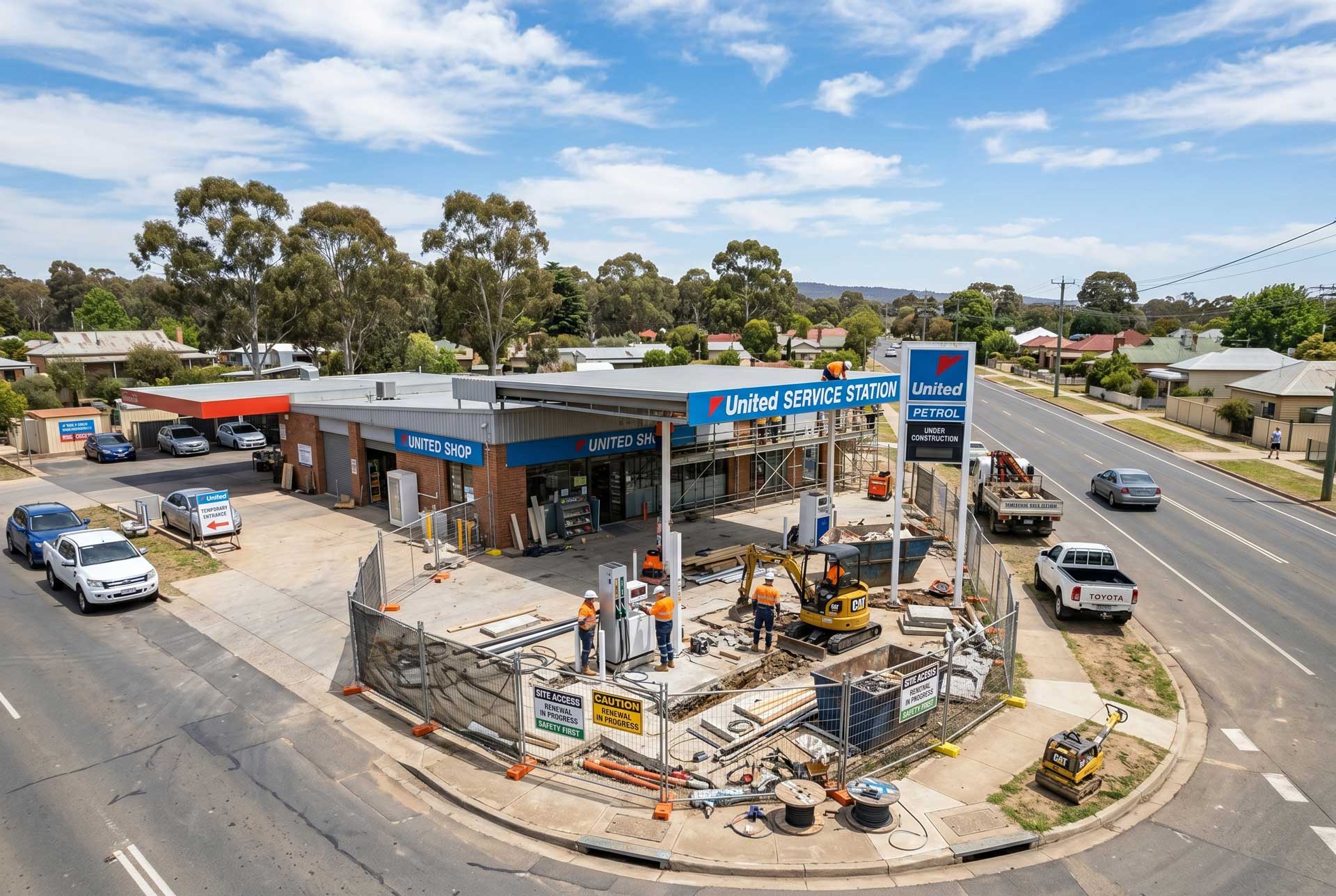
Petrol station canopy renovation is an important solution for aging fuel station projects that need repair, strengthening, or full replacement. For station owners and contractors, the right renovation approach can improve safety, site appearance, and long-term operating performance.
In many cases, the question is not whether the canopy should be improved, but how. Should the structure be repaired? Does it need local strengthening? Or is a full canopy replacement the more practical option? The answer depends on the actual condition of the existing steel structure, the operating needs of the station, and the long-term goals of the project.
At TL Engineering Co., Limited, we understand that canopy renovation projects are different from new-build projects. Renovation work must consider the existing structure, site conditions, installation sequence, and the need to control disruption during station upgrades. In this article, we explain the main decision points in petrol station canopy renovation and how steel fabrication support can help project teams move forward more efficiently.
What Does Petrol Station Canopy Renovation Usually Include?
A petrol station canopy renovation can cover a wide range of work, depending on the age and condition of the site. In some projects, only selected steel members need to be repaired or replaced. In others, the entire canopy structure may need to be redesigned and refabricated.
Typical renovation scope may include:
- replacement of damaged steel members
- strengthening of columns, beams, or connections
- extension of the canopy area
- modification of fascia and branding layout
- upgrading the roofing support structure
- corrosion treatment and repainting or galvanizing
- replacement of old canopy steel with new fabricated components
This is why renovation projects should never be treated as simple repainting work. A proper technical review is needed to determine whether the existing steel can continue to perform safely and whether the station’s new operational or branding requirements can be met.
When Is Repair Enough?
Repair may be enough when the overall structure remains sound and the damage is limited to specific areas. For example, a project may only require local plate replacement, connection adjustment, or treatment of areas affected by surface corrosion.
Repair is often the more practical option when:
- the original structural system is still reliable
- the damaged area is limited and clearly defined
- the station layout is not changing significantly
- the owner wants to reduce downtime and cost
- the renovation is mainly cosmetic plus local structural correction
However, repair work should still be approached carefully. Before deciding on repair, the project team should review actual member condition, deformation, corrosion level, and the effect of any local damage on the overall canopy system.
When Is Strengthening the Better Option?
Strengthening becomes necessary when the existing canopy is still usable but no longer fully matches new load requirements, revised layout needs, or long-term performance expectations.
For example, a station may be upgraded with:
- a new fascia system
- changed roofing arrangement
- additional lighting or services
- wider coverage requirements
- revised structural checks by the project engineer
In these cases, the structure may not need full replacement, but selected areas may need reinforcement. This can include additional stiffeners, new connection plates, local section reinforcement, or replacement of critical members.
Strengthening can help the owner keep part of the original structure while improving performance. It is often a cost-effective option when the existing canopy still has usable value but cannot remain unchanged.
When Is Full Canopy Replacement More Practical?
A full replacement is often the best solution when the existing canopy has major corrosion, serious structural deterioration, repeated repair history, or no longer fits the station’s redevelopment plan.
Replacement is usually more practical when:
- corrosion affects multiple key members
- the canopy geometry no longer matches the new site layout
- the owner wants a new visual standard and long-term solution
- the existing structure is difficult to modify safely
- repair and strengthening would become too complex or inefficient
In many aging fuel station projects, full replacement may actually save time in the long run. Instead of working around old limitations, the project team can move to a cleaner fabrication and installation process with new steel components designed for the updated station layout.
Key Information Needed Before Quotation
For a petrol station canopy renovation project, accurate quotation depends on accurate input. Contractors or project owners should ideally provide as much technical information as possible before asking a supplier to price the work.
Useful project information includes:
- existing drawings if available
- site photos from multiple angles
- current canopy dimensions
- details of damaged or modified areas
- whether the project is repair, strengthening, or replacement
- project location and operating conditions
- required finish, such as painting or galvanizing
- target delivery schedule
When the original drawings are incomplete, site photos and marked-up dimensions can still help start the review process. Clear early information reduces quotation errors and helps the supplier recommend a more suitable fabrication approach.
Material Selection and Corrosion Protection
In renovation projects, corrosion protection is one of the most important practical issues. The structure will remain in outdoor service, so the finish should support long-term durability and reduced maintenance.
Depending on project requirements, the new fabricated steel may use:
- painted steel systems
- hot-dip galvanized components
- galvanized plus painted systems
- other specified protective treatments
The right choice depends on the client’s budget, site environment, maintenance expectations, and design requirements. In many renovation projects, surface treatment is not just a finishing issue. It is part of the long-term asset decision.
Fabrication Planning for Renovation Projects
Fabrication for a renovation project must consider more than just steel production. It must also consider how the new components will connect to existing site conditions and how installation will be carried out with minimal disruption.
This is why renovation-related fabrication often requires:
- careful drawing review
- confirmation of dimensions and interfaces
- clear marking of replacement parts
- practical packing by installation sequence
- communication about site lifting and handling constraints
Compared with a new-build canopy, renovation fabrication often demands more coordination because old and new elements may need to work together during the transition period.
Why Overseas Fabrication Support Can Be Valuable
For contractors working across multiple station upgrades, an experienced steel fabrication supplier can help not only with production, but also with workflow clarity. This is especially valuable when the buyer wants custom steel components prepared according to project drawings and shipped in an organized way.
A reliable supplier should be able to support:
- drawing-based quotation
- custom steel fabrication
- clear part identification
- corrosion protection requirements
- inspection before shipment
- export packing support
For project teams handling service station renovation programs, supplier coordination becomes a major part of risk control. Clear fabrication support can reduce delays, confusion, and avoidable site problems.
Conclusion
Petrol station canopy renovation is not a one-size-fits-all task. Some projects need repair, others need strengthening, and some are better served by full replacement. The right solution depends on structural condition, project goals, budget, and long-term operating expectations.
For fuel station owners and contractors, the best results usually come from early technical review, clear scope definition, and practical fabrication planning. Whether the project involves local modification or complete canopy replacement, a well-organized steel solution helps the renovation move faster and more reliably.
If you are planning a petrol station canopy renovation project, TL Engineering Co., Limited can support drawing review, steel fabrication, corrosion protection requirements, and export delivery coordination. Send us your drawings or project information to discuss your project.
